Meet the Mind Keepers: Inside the Booming Business of Keeping Pro Gamers from Walking Out the Door
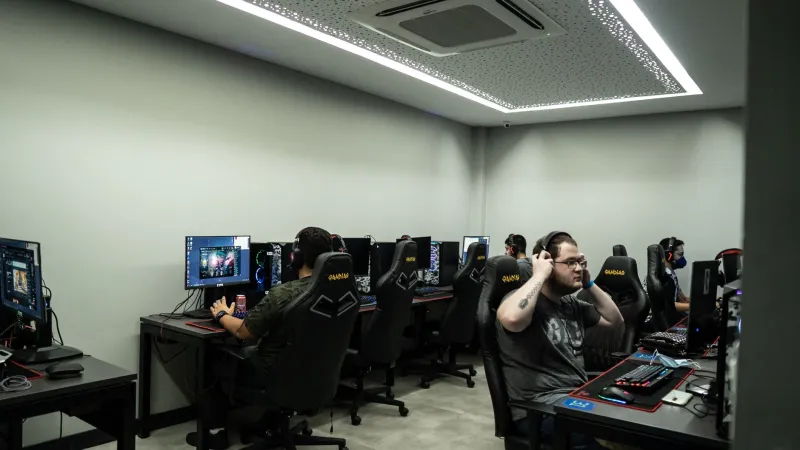
Somewhere between the highlight reels and the championship trophies, pro gaming has a quiet crisis on its hands. Talented players are flaming out faster than ever, jumping ship mid-season, or simply logging off for good before they hit their peak. Studios have thrown money at better hardware, bigger prize pools, and flashier team houses — and still the talent keeps walking. So now they're trying something different: hiring people whose entire job is to make sure that doesn't happen.
Welcome to the world of the retention coach.
What Exactly Is a Retention Coach Doing All Day?
The title sounds like something out of a corporate HR manual, and honestly, that's not far off. Retention specialists in esports pull from a mix of sports psychology, performance coaching, and old-fashioned relationship management. Their job isn't to make players better at the game — that's what the in-game coaches are for. Their job is to make players want to stay.
In practice, that means a lot of one-on-one conversations. Check-ins about mental load. Mediation when there's friction inside a roster. Monitoring for early signs of burnout before it becomes a headline. Some coaches work closely with team psychologists; others operate more like a hybrid between a career advisor and a life coach. A few organizations have described the role as essentially a "player advocate" — someone inside the org who the athlete trusts enough to be honest with.
And the pay? Sources familiar with contracts at top-tier North American orgs put retention specialist salaries anywhere from $80,000 on the low end to well over $200,000 for coaches embedded with franchised league rosters. When you factor in bonuses tied to player retention metrics — yes, those exist — total annual compensation can push past the half-million mark at the most competitive organizations.
Why Studios Are Finally Taking This Seriously
The math isn't complicated. When a top-ranked player defects mid-season, the costs stack up fast. Buyout clauses, emergency roster shuffles, the hit to sponsorship value when a team's star suddenly vanishes — it adds up to losses that dwarf whatever a retention coach costs annually. One league insider estimated that a single high-profile mid-season departure from a franchised roster could cost an organization upward of $1.5 million when all the downstream damage is accounted for.
There's also the pipeline problem. Esports has a notoriously short career arc. Players in certain titles hit their competitive ceiling in their early twenties, and the pressure to perform at the highest level — often in front of millions of online viewers — creates a psychological grind that traditional sports structures weren't built to handle. Unlike the NFL or NBA, most esports orgs don't have decades of institutional knowledge about how to manage athlete welfare. They're building the plane while flying it.
Retention coaches, at least in theory, are supposed to be the people who catch the cracks before they become fractures.
The Skeptics Have a Point
Not everyone is sold. Critics inside the industry — and there are plenty — argue that retention coaching is less a solution and more an expensive Band-Aid over structural problems that studios don't want to fix. Low base salaries for non-star players, punishing travel and content schedules, and a lack of genuine career development pathways are the real drivers of talent exodus. Hiring someone to talk players through their feelings doesn't change any of that.
There's also a trust problem baked into the role itself. A retention coach is paid by the organization, which means their interests aren't always perfectly aligned with the player's. When a star player is quietly considering leaving for a competitor, how honest are they going to be with someone whose salary depends on keeping them in place? Several current and former pro players, speaking informally, said they'd be cautious about how much they'd actually share with a coach in that position.
One veteran team manager put it bluntly: "The best retention tool is a fair contract and a roster that doesn't hate each other. No coach fixes a toxic environment."
Where It Actually Seems to Work
That said, there are genuine success stories — or at least, credible ones. Organizations that have integrated retention specialists as part of a broader player wellness program, rather than as a standalone fix, report better results. When the coach has a clear mandate that includes advocating for players in contract discussions, pushing back on unreasonable scheduling demands, and coordinating with mental health professionals, the role carries more weight.
A few North American orgs have quietly restructured their entire player support apparatus around this model over the past two years. The results are hard to measure precisely — retention is a negative outcome, meaning you're counting the thing that didn't happen — but roster stability at those organizations has noticeably improved compared to league averages.
There's also a generational angle worth considering. Younger players entering the scene today are more openly aware of mental health than the generation that built competitive gaming in the early 2010s. They're more likely to engage with a support structure if it's presented genuinely, and less likely to see asking for help as a weakness. That cultural shift makes the retention coach role more viable now than it would have been five years ago.
The Bigger Question Nobody Wants to Answer
Here's the thing that keeps coming up when you talk to people inside competitive gaming: even the best retention work can only do so much. The structural ceiling on esports careers is real. Games get patched into irrelevance, titles lose their player base, and the physical and cognitive demands of competing at the top level take a toll that no amount of coaching conversations fully offsets.
What studios are really betting on when they hire retention coaches isn't that players will stay forever. It's that they'll stay long enough — through a championship run, through a major sponsorship cycle, through the stretch of the season that actually matters for the org's bottom line. Whether that's a genuine investment in player welfare or a sophisticated way to extract maximum value before the inevitable exit is a question worth sitting with.
For now, the checks are being written, the coaches are being hired, and the rosters are being watched. Whether the mind keepers can actually hold the line — or whether they're just buying time — is something the next few seasons will start to answer.
At J88M GameZone, we'll be watching.